A freshly washed black car parked under the fall sunshine in Montreal immediately catches the eye. Its deep paint finish reflects the light and highlights every curve of the bodywork. Yet this elegance comes with a challenge: fine scratches, wash marks, and small paint chips are especially noticeable. Installing PPF on a black or dark-colored car helps protect the paint from everyday hazards.
At Dr Tint in Montreal, we offer Armor protective films to help drivers preserve their vehicle’s appearance despite Quebec’s sometimes demanding road conditions.
Why Does Black Paint Show Imperfections So Easily?
Black is a popular color for its elegance and the depth of its reflections. However, it has one particular characteristic: it makes certain surface imperfections more noticeable.
Contrary to popular belief, black paint is not necessarily more fragile than white or silver paint. The main difference is the contrast between the imperfections and the dark color, which makes them easier to see.
Fine Scratches That Appear in Sunlight
You’ve just washed your vehicle, and when you look at it under direct light, you notice fine circular marks on the hood.
These small scratches, often called swirl marks, generally appear in the clear coat that covers the paint.
They can be caused by several factors:
- Washing with contaminated sponges or accessories.
- Dust particles rubbing against the bodywork.
- Automatic car wash brushes that may cause light abrasions.
- Drying with a dirty or unsuitable towel.
- Repeated contact with certain areas of the vehicle.
On dark paint, these marks scatter light and become especially noticeable when sunlight hits the bodywork directly.
Stone Chips: Another Highly Visible Problem
Small stones thrown up by other vehicles can damage the clear coat and paint.
On a black vehicle, a chip that exposes a lighter layer underneath can immediately catch your attention.
Driving on Highway 40, Highway 15, or roads throughout the Laurentians exposes vehicles to flying road debris.
This is exactly the kind of damage that paint protection film is designed to help prevent.
PPF on a Black or Dark-Colored Car: How Does This Protection Work?
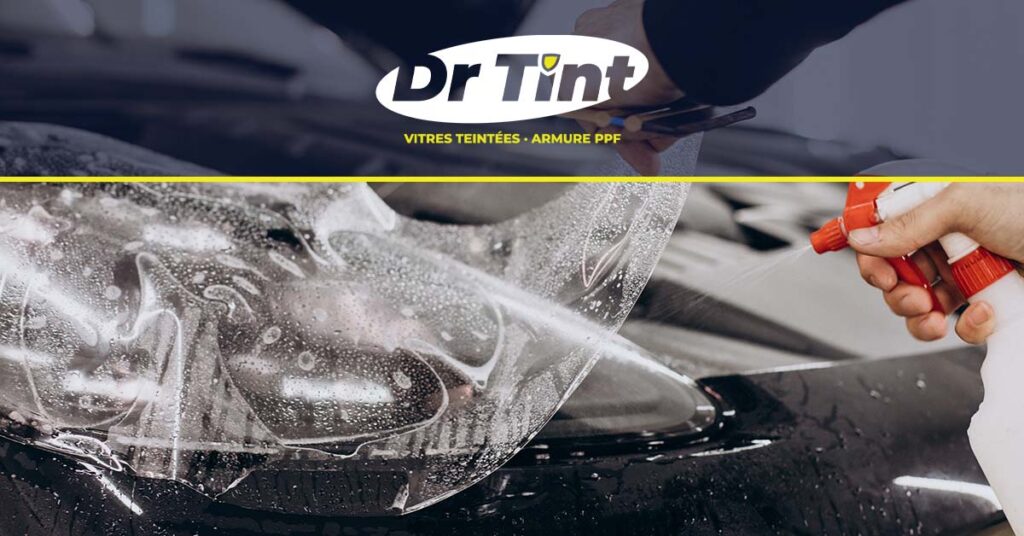
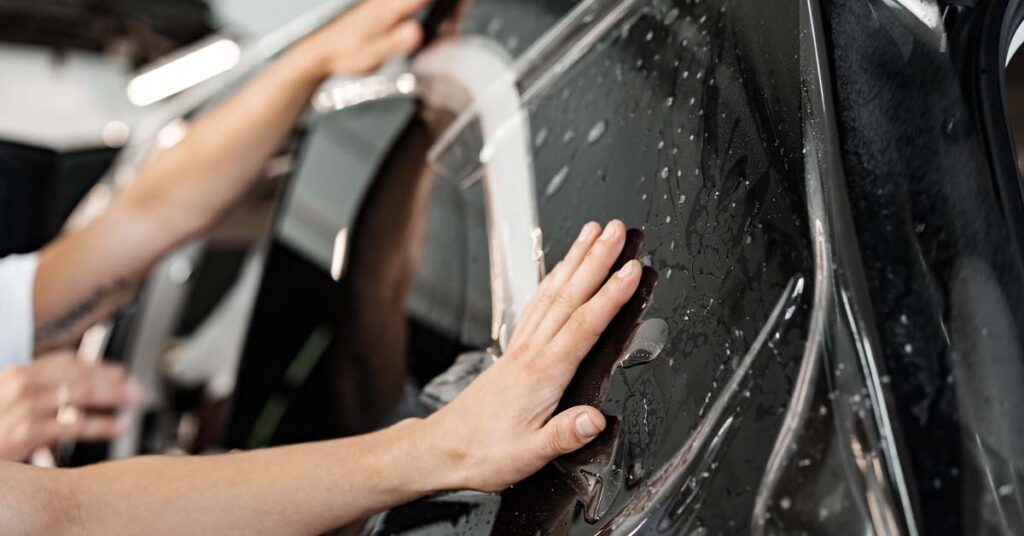
PPF, short for Paint Protection Film, is a transparent protective film applied to certain areas of a vehicle.
Its purpose is to create a physical barrier between the paint and external hazards.
At Dr Tint, our Armor protective films are made of urethane and feature an anti-UV layer.
They are designed to help protect the bodywork against several common hazards:
- Flying rocks and gravel.
- Small debris on the road.
- Sand and certain abrasive particles.
- Insects.
- Road salt and other road contaminants.
This protection is particularly beneficial for black, dark blue, charcoal gray, and other vehicles with glossy finishes that tend to reveal imperfections easily.
A Transparent Film That Preserves the Original Color
One of the main advantages of PPF is its discreet appearance.
Unlike a color-changing vehicle wrap, transparent paint protection film preserves the overall appearance of the original paint.
On a glossy black car, this means maintaining the reflections and visual depth that make the finish so appealing.
However, the quality of the installation, surface preparation, and positioning of the film edges all influence the final appearance.
Does PPF Protect Against All Scratches?
It is important to distinguish between protecting the paint and the durability of the film itself.
PPF helps limit damage caused by certain abrasions and minor impacts, but it is not indestructible.
The film’s surface can also develop marks. Significant friction, deep scratches, or major impacts may exceed its protective capabilities.
The goal is not to make the bodywork invulnerable, but to reduce the paint’s direct exposure to everyday damage.
Which Areas of a Black Car Should You Protect First?
Not every part of a vehicle faces the same risks. Choosing which areas to protect depends on your driving habits, regular routes, and desired level of protection.
Front Bumper and Hood: The Most Exposed Areas
The front of a vehicle regularly encounters debris thrown up from the road.
On a black car, small chips on the hood or bumper can quickly affect the uniform appearance of the finish.
For drivers who use Greater Montreal’s highways every day, these areas deserve particular attention.
Fenders, Side Mirrors, and Rocker Panels
These components are also exposed to flying debris.
Rocker panels, in particular, can collect sand, dirt, and particles kicked up by the tires.
A protective film can help preserve the covered surfaces against marks caused by these hazards.
Door Handles and Trunk Sill: Often-Overlooked Areas
Some damage does not occur while driving but simply through everyday vehicle use.
Think about loading groceries into the trunk, carrying sports equipment on weekends, or frequently reaching for the door handles.
These everyday actions can cause minor surface abrasions.
On black paint, these marks can be particularly noticeable. Targeted protection in these areas may therefore be worthwhile.
Partial or Full PPF: Which Coverage Is Best for a Dark-Colored Car?
Choosing how much of your vehicle to protect is an important decision.
Partial protection may be suitable when your main goal is to reduce the risk of paint chips in the most exposed areas.
Full protection covers a larger portion of the bodywork and is intended for owners who want to preserve more of their vehicle’s painted surfaces.
When Should You Choose Partial PPF?
This option is worth considering if:
- You mainly drive in the city and want to protect specific vulnerable areas.
- You want to prioritize protection for the hood and front bumper.
- You want to adjust your investment to fit your budget.
- You want to reduce the risk of damage from flying road debris.
Why Consider Full PPF Coverage?
More extensive coverage may be particularly appealing for a new black car, a sports car, or a vehicle you plan to keep for several years.
It protects more painted panels and helps reduce differences in exposure between protected and unprotected surfaces.
However, it is important to consider the paint finish and the location of the film cuts, as the edges of a protective film may sometimes be visible.
To explore your options in more detail, read our article about partial or full PPF.
Should You Prepare Black Paint Before Installing PPF?
Paint protection film does not automatically eliminate existing imperfections on the bodywork.
If your vehicle has fine scratches, chips, or other visible defects, its condition should be evaluated before installation.
Proper preparation includes cleaning the surfaces and removing contaminants that could interfere with the film’s adhesion.
Depending on the vehicle’s condition, professional paint correction may also be considered before applying the film.
This precaution applies to both used and new vehicles, as even a recently delivered car may have minor marks from handling or preparation.
The goal is simple: protect a properly prepared surface to achieve the cleanest possible finish.
Why Protect a Black Car Before Winter in Quebec?
Fall is an excellent time to think about protecting your vehicle’s paint.
Montreal’s beautiful October days gradually give way to colder temperatures, snow, and roads covered with salt and abrasives.
These conditions can expose vehicle paint to several hazards, especially during winter driving.
Armor protective films are designed to withstand Quebec road conditions and protect covered surfaces against flying gravel, debris, and various contaminants.
However, PPF does not replace regular maintenance.
Even when your paint is protected, it remains important to remove accumulated salt and dirt to help keep the bodywork and other vehicle components in good condition.
How Should You Maintain a Black Car with PPF?
Long-lasting protection also starts with good washing habits.
On a black car, proper maintenance helps preserve the quality of the reflections and limit the appearance of fine surface marks.
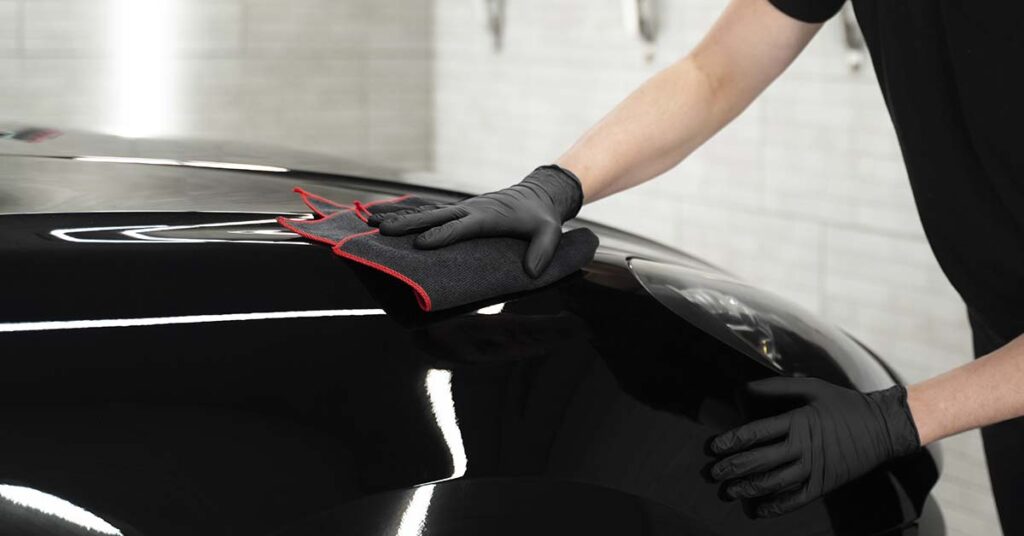
At Dr Tint, we recommend cleaning Armor protective films with mild soap and rinsing them with water, without using abrasive products or solvents.
A few additional precautions are helpful:
- Rinse before wiping: Remove as much dust, sand, and gravel as possible before touching the surface.
- Use clean washing accessories: Choose a soft wash mitt and suitable microfiber towels.
- Avoid dry rubbing: Never wipe a dusty vehicle without cleaning it first.
- Dry gently: Remove water with a clean microfiber towel to minimize water spots.
- Pay attention to film edges: Avoid directing high-pressure water jets at the edges of the film.
After an Armor protective film installation, we also recommend waiting 48 hours before washing the vehicle.
For more information, read our tips on PPF maintenance.
Dr Tint in Montreal: Preserve the Elegance of Your Black Car
A black car has a distinctive presence on the road. Its reflections, body lines, and deep paint finish deserve protection suited to the way you use your vehicle.
At Dr Tint in Montreal, Quebec, we offer Armor protective films to help preserve your vehicle’s appearance against common road hazards.
Whether you own a black sedan, a charcoal gray SUV, or a dark blue sports coupe, we can advise you on which areas to protect and which options best suit your needs.
Our goal is to help you choose a solution that matches your driving habits, aesthetic expectations, and budget.
Want to protect your paint before winter? Visit our Montreal location or contact Dr Tint for a personalized quote.
FAQ — PPF on a Black or Dark-Colored Car
1. Is PPF More Beneficial on a Black Car Than on a White Car?
PPF protects painted surfaces regardless of their color. However, scratches and certain paint chips are generally more visible on black or dark-colored vehicles. This aesthetic characteristic can make paint protection particularly appealing.
2. Does Transparent PPF Change the Shine of Black Paint?
Transparent paint protection film is designed to preserve the overall appearance of the original paint. However, its finish may vary depending on the product, the vehicle’s paint finish, and the quality of the installation. An assessment beforehand can help determine the expected result.
3. Can PPF Be Installed on a Black Car That Already Has Fine Scratches?
Yes, but existing imperfections should be evaluated before installation. Paint protection film is not a paint correction treatment. Depending on the condition of the bodywork, preparation or paint correction may be necessary to achieve a satisfactory appearance.
4. What Is the Difference Between PPF and a Nano-Ceramic Coating on a Black Car?
PPF creates a physical barrier that helps protect paint against minor impacts and abrasions. A nano-ceramic coating primarily affects surface properties, including resistance to certain contaminants and water-repellent performance. These two protection solutions therefore serve different purposes.
5. How Long Can PPF Last on a Black Car?
The lifespan depends on the product used, its exposure, and maintenance. At Dr Tint, Armor protective films come with a 10-year warranty against cracking and peeling for the vehicle’s original owner. This warranty does not mean that the film is protected against every type of damage or wear.