You just washed your car, and under the sunlight, fine scratches appear on the hood. These small marks can be frustrating when you want to keep your vehicle’s paint looking flawless. Fortunately, self-healing PPF uses technology that can reduce certain micro-scratches through heat, without the need for polishing.
At Dr Tint in Montreal, we offer XPEL paint protection films designed to preserve your vehicle’s appearance. Discover how this technology works, what it can actually repair, and why it’s worth considering before winter arrives in Quebec.
What Is Self-Healing PPF and What Makes It Different?
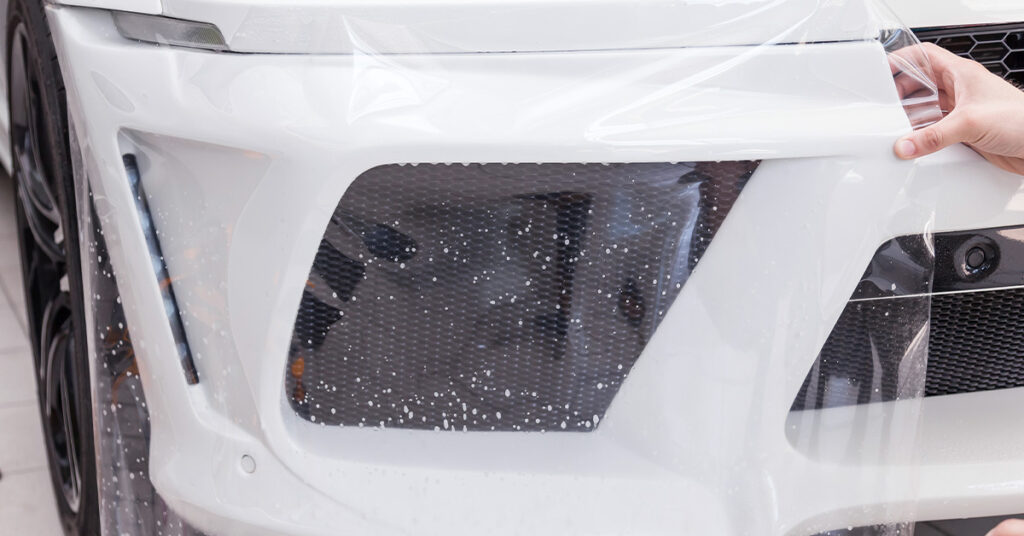
PPF, or Paint Protection Film, is a transparent film applied to a vehicle’s exterior to protect the paint against rock chips, minor friction, and various external hazards.
Self-healing PPF has an additional feature: its surface can reduce certain superficial scratches when exposed to sufficient heat.
This technology helps maintain a more uniform appearance despite the small marks that may develop during everyday driving.
Unlike a simple wax or finishing product, the film also creates a physical barrier between the paint and external elements.
It therefore combines two complementary functions:
- Protecting the paint: limiting damage caused by minor impacts and road debris.
- Preserving the film’s appearance: reducing certain micro-scratches without necessarily requiring mechanical correction.
This combination is particularly appealing to drivers who want to keep their vehicles in good condition for years to come.
How Does Self-Healing PPF Technology Work?
A Surface Layer With Unique Properties
The technology relies on the characteristics of the materials used to manufacture certain paint protection films.
XPEL films equipped with this feature use elastomeric polymers that can return to a more uniform surface after certain minor deformations.
Imagine a fine mark left on the film’s surface after friction. When heat acts on the material, its properties allow it to reduce the imperfection, provided the damage is superficial enough.
In other words, it is the surface of the protective film that repairs itself, not the paint underneath.
Why Is Heat Essential?
Heat plays an important role in the self-healing process.
It helps reduce superficial marks on films specifically designed for this purpose.
Several conditions can contribute to the process:
- Natural exposure to sunlight.
- A sufficiently warm ambient temperature.
- The controlled application of warm water, following the manufacturer’s recommendations.
For XPEL ULTIMATE PLUS film, the manufacturer indicates that certain light scratches can diminish within 20 to 30 minutes at room temperature.
However, this timeframe depends on the conditions and does not mean that every mark will automatically disappear.
Excessive heat should also be avoided, particularly when using equipment that could damage the film.
Which Scratches Can Self-Healing PPF Actually Remove?
The term “self-healing” may give the impression that a film can repair all types of damage. In reality, this technology has specific limitations.
Micro-Scratches That Can Fade
Self-healing properties primarily apply to superficial marks on the film’s surface.
Examples include:
- Fine scratches visible under certain lighting angles.
- Superficial circular marks, commonly known as swirl marks.
- Light friction marks on the film.
- Certain marks left during vehicle washing.
Imagine your car parked in a residential driveway in Montreal. After several washes, small marks begin to appear when sunlight hits the hood.
With a suitable self-healing film, some of these imperfections can fade, allowing the finish to maintain a more uniform appearance.
Damage That PPF Cannot Repair
Even the best protective films have their limitations.
Self-healing technology cannot correct:
- Deep scratches that penetrate the film.
- Cuts and punctures.
- Tears caused by significant impacts.
- Damage already present in the paint.
- Dents and body panel deformation.
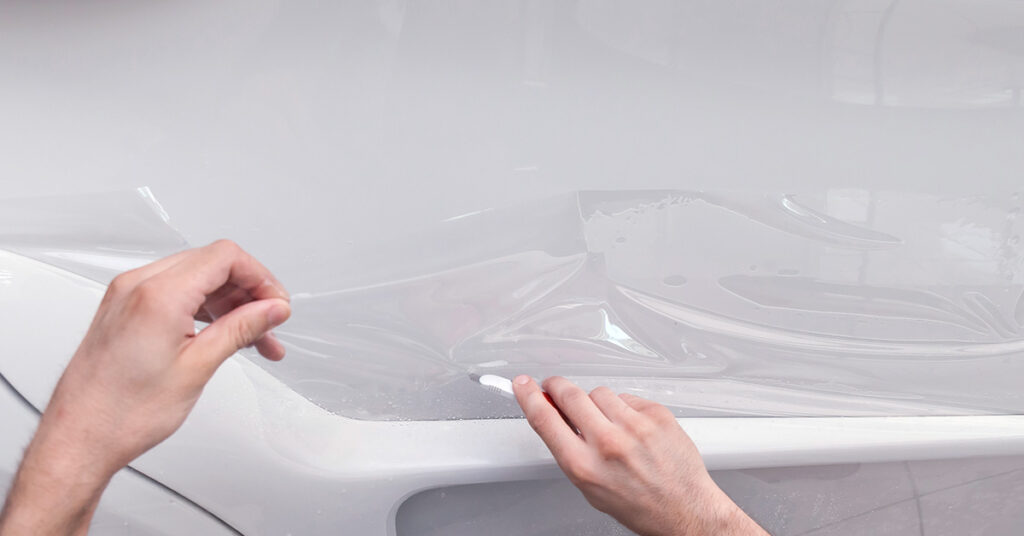
When a film is severely damaged, the affected section may need to be replaced.
The purpose of self-healing PPF is not to make a vehicle indestructible, but to reduce the appearance of minor marks while protecting the paint against certain types of damage.
Does Self-Healing PPF Work During Quebec Winters?
In Montreal, road conditions change considerably from season to season.
In October, temperatures begin to drop. A few weeks later, drivers must deal with cold weather, snow, road salt, and abrasive materials on the pavement.
These conditions raise an important question: does PPF retain its self-healing properties during winter?
Cold Weather Can Slow Down the Self-Healing Process
Low temperatures can slow down the reduction of micro-scratches.
A light mark that would disappear quickly under warmer conditions may therefore remain visible longer when the vehicle’s body panels are cold.
This does not necessarily mean that the film has lost its properties.
For certain XPEL films, using warm water may help the process, provided the manufacturer’s instructions are followed.
Useful Protection Even When Temperatures Drop
The role of PPF goes beyond self-healing.
Even in winter, a suitable film continues to create a physical barrier on protected surfaces.
It can help limit damage caused by:
- Small stones kicked up from the road.
- Gravel and abrasive particles.
- Certain everyday friction marks.
- Direct contact between road salt, contaminants, and the paint.
For drivers who regularly travel on Highway 40, the Metropolitan Expressway, or roads leading to the Laurentians, this protection makes a lot of sense.
XPEL ULTIMATE PLUS: An Example of Self-Healing Paint Protection Film
At Dr Tint, we offer XPEL protection solutions, a brand recognized for its automotive films.
The XPEL ULTIMATE PLUS line incorporates self-healing technology designed to reduce certain micro-scratches and superficial swirl marks.
It combines this feature with protection against various road hazards, including minor gravel impacts.
The value of this technology goes beyond its ability to reduce certain marks. It also helps maintain a clean, well-kept finish while adding physical protection to the vehicle’s exterior.
However, it is important to distinguish between the properties of different product lines. Not all protection films necessarily offer the same self-healing characteristics.
The product you choose should therefore reflect your desired results and your vehicle’s specific needs.
How Should You Maintain Self-Healing PPF to Preserve Its Effectiveness?
Self-healing properties do not eliminate the need for regular maintenance.
Even when a film can reduce certain superficial marks, it remains important to minimize friction and remove contaminants.
We recommend the following practices:
- Wash your vehicle regularly using a mild soap suitable for paint protection films.
- Use clean, non-abrasive accessories, such as a soft wash mitt and microfiber towels.
- Avoid harsh cleaning products that could damage the surface layer.
- Remove contaminants promptly, including crushed insects and bird droppings.
- Avoid directing high-pressure water jets at the film’s edges, as this can contribute to lifting or peeling.
After installing XPEL ULTIMATE PLUS film, a waiting period of 48 hours before the first wash is also recommended.
Proper maintenance helps preserve the film’s appearance and protective qualities over time.
Dr Tint in Montreal: Choose the Right Protection for Your Vehicle
Between daily commutes, tight parking spaces, and changing seasons, a vehicle’s exterior is regularly exposed to minor road hazards.
At Dr Tint in Montreal, we offer Armor paint protection film solutions to help Quebec drivers keep their vehicle’s paint in good condition.
Depending on your vehicle and your needs, different areas can be targeted:
- The front bumper, particularly exposed to flying gravel.
- The hood, which receives direct impacts from various road debris.
- The front fenders and side mirrors, often exposed to minor impacts.
- The trunk sill, subject to friction when loading and unloading items.
More extensive protection can also be considered.
Choosing between partial or full PPF depends on your budget, driving habits, and the areas you want to protect.
Our team can help you select the appropriate film and coverage for your needs.
Want to protect your vehicle’s paint with self-healing film?
Visit us at Dr Tint in Montreal or contact our team for personalized advice and a quote tailored to your vehicle.
FAQ: 5 Frequently Asked Questions About Self-Healing PPF
1. Can Self-Healing PPF Remove All Scratches?
No. This technology can reduce certain micro-scratches and superficial marks on the film. It cannot repair deep cuts, punctures, or damage that has reached the paint.
2. How Long Does Self-Healing PPF Take to Work?
It depends on the product and conditions. For XPEL ULTIMATE PLUS, the manufacturer indicates that certain light scratches can diminish within 20 to 30 minutes at room temperature. The process may take longer in cold weather.
3. Does Self-Healing PPF Work Without Sunlight?
Yes. Sunlight is not essential for this technology to work. A suitable ambient temperature may be enough to reduce certain marks. However, heat helps facilitate the process.
4. Can Self-Healing PPF Be Installed on a Used Car?
Yes. Paint protection film can be installed on a new or used vehicle, provided the surface is properly prepared. Scratches or defects already present in the paint will not disappear because of the film. A preliminary inspection helps determine the necessary preparation.
5. Is Self-Healing PPF Worth It for Driving in Montreal?
It can be particularly beneficial for drivers who want to protect their paint against minor everyday hazards. Between flying gravel, winter abrasives, and frequent friction, a suitable film adds a useful layer of protection. At Dr Tint in Montreal, we can help you choose a solution based on your vehicle and driving habits.