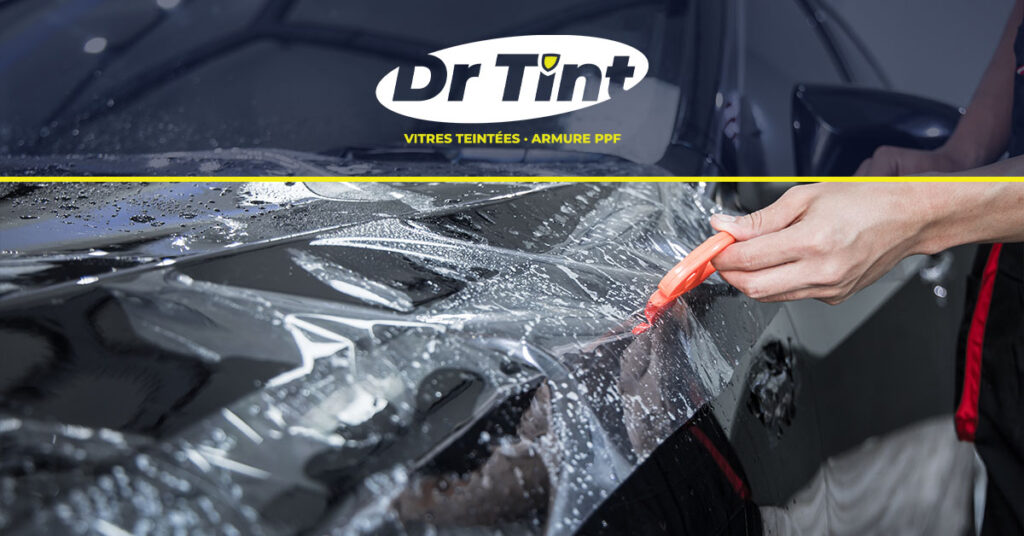
Choosing between partial or full PPF is not just a question of budget. It is mainly a question of usage, vehicle type, roads driven, and the level of peace of mind you are looking for. In Montreal, between spring potholes, winter road salt, gravel kicked up on the highway, and tight everyday parking spaces, a vehicle’s paint rarely gets spared. Paint protection film, also known as stone guard film, acts as a transparent barrier against rocks, gravel, salt, insects, tar, and road debris. At Dr Tint, Armure films are made of urethane with an anti-UV layer, designed to protect the vehicle’s sensitive areas.
Partial or full PPF: understanding the real difference
Partial PPF targets the areas most exposed to impacts. This usually includes the front bumper, partial hood, front fenders, side mirrors, and sometimes the headlights, door handles, rocker panels, or trunk sill. It is a targeted protection solution designed for drivers who want to protect the areas that take the most abuse every day.
Full protection goes much further. It can cover a large portion of the bodywork, or even the entire vehicle depending on the project. It is intended for drivers who want to preserve the overall appearance of their vehicle, reduce visible wear marks, and maintain a more uniform finish over the long term. The film can be applied only to the most exposed areas or across the entire body for complete protection.
Partial PPF: the smart choice for high-risk areas
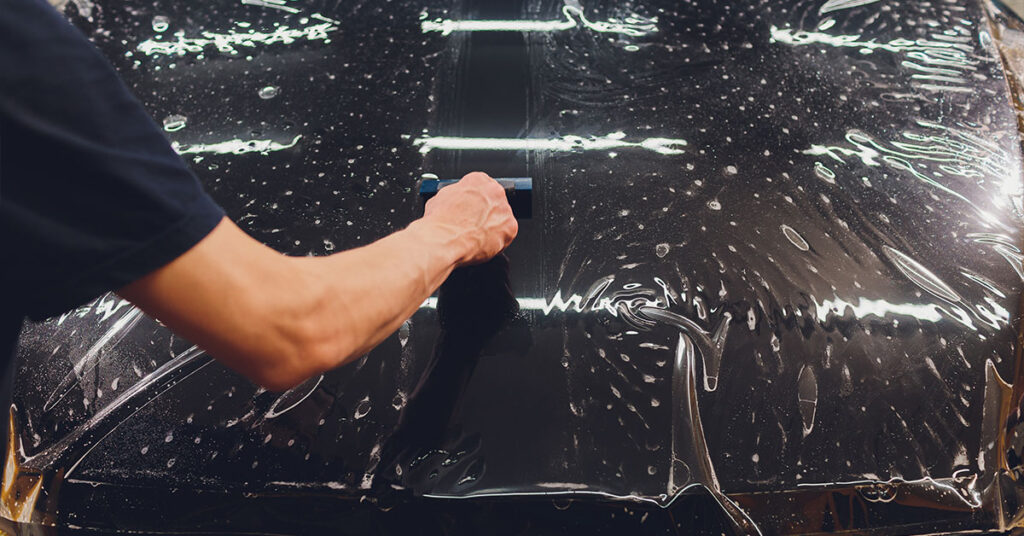
Partial PPF is often the ideal entry point. It protects the areas that absorb the most frequent damage: small stones on the highway, abrasive sand in spring, insects in summer, and calcium in winter. For someone who mostly drives in the city, often parks outside, or simply wants to avoid visible chips on the front of the vehicle, this option makes a lot of sense.
Picture a typical drive: Highway 40, Décarie, bridges toward the South Shore, dense traffic around Montreal. The vehicle is constantly exposed to road debris. Even a recent vehicle can quickly show small chips on the bumper or front edge of the hood. Partial PPF allows you to protect these surfaces without necessarily covering the entire vehicle.
Which vehicles is partial PPF recommended for?
Partial PPF is a very good fit for everyday vehicles: sedans, compact SUVs, electric vehicles, family vehicles, or cars mainly used for urban driving. It is also relevant for a leased vehicle, especially if you want to reduce the risk of visible marks at lease return.
It is also a smart solution for an owner who wants to protect their investment without immediately choosing maximum coverage. You target the most vulnerable areas, improve paint resistance, and preserve the vehicle’s original appearance.
Full PPF: for maximum peace of mind
Full protection is for those who want to go further. It is especially appealing for new, high-end, sports, collector, or heavily exposed vehicles. If you drive a lot, regularly take long trips, or your vehicle passes through country roads, construction zones, industrial areas, or busy highways, full coverage becomes more relevant.
With full PPF, the goal is not only to protect the front end. It is to preserve the entire vehicle against repeated minor damage: rubbing, light scratches, road debris, marks around doors, trunk edges, lower doors, and side panels.
When does full protection become the better choice?
Full protection becomes worthwhile when the vehicle’s value, new condition, or your level of expectation justifies broader coverage. For a luxury car, sports car, premium SUV, or a vehicle you plan to keep for a long time, the logic is simple: the more surface you protect, the more the bodywork keeps a uniform appearance.
It is also an option to consider if you are meticulous. Some drivers notice the smallest chip. Others want their vehicle to keep its delivery-day look as long as possible. In that case, full PPF offers a level of peace of mind that is hard to beat.
Dr Tint in Montreal: protection designed for Quebec roads
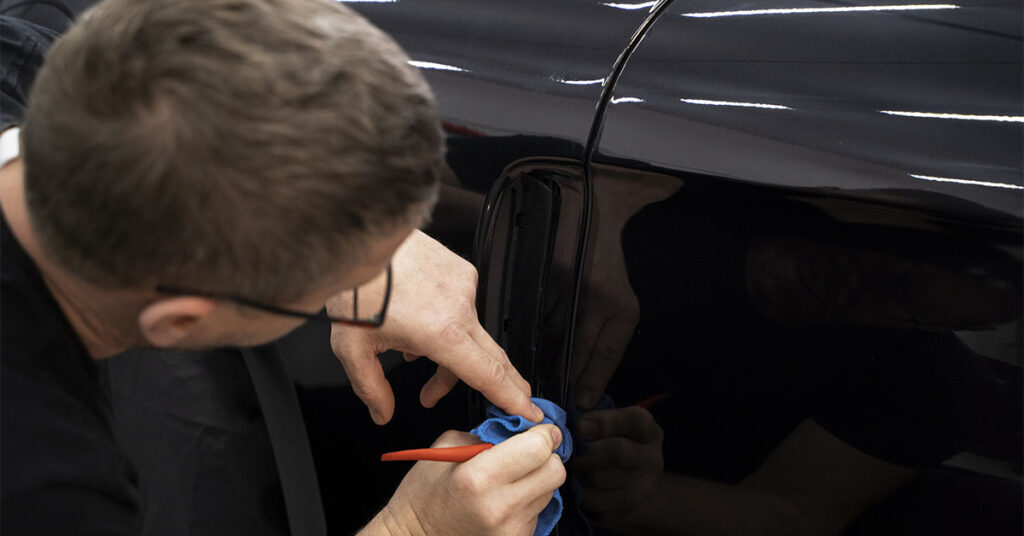
At Dr Tint in Montreal, the approach is practical: recommend coverage based on your vehicle, your habits, and your priorities. Armure products are suitable for several types of vehicles, including cars, motorcycles, recreational vehicles, and trucks. The films are designed for sensitive areas such as the hood, front fenders, mirrors, rear bumper sill, and headlights.
This local reality matters. In Quebec, automotive paint goes through highly contrasting seasons. Summer brings heat, insects, and UV rays. Winter adds salt, calcium, humidity, freezing temperatures, and abrasive debris. Dr Tint recommends stone guard film as a durable solution to preserve the bodywork against gravel chips, sand, salt, and chemicals.
How to choose between partial or full PPF?
The right decision comes down to four simple criteria.
First, look at your driving habits. If you mostly take short urban trips, partial PPF may be enough. If you often drive on the highway, more extensive coverage becomes more worthwhile.
Next, consider the value of the vehicle. The newer, rarer, more luxurious, or more expensive to repaint the vehicle is, the more full protection makes sense.
Third, think about how long you plan to keep it. If you intend to keep the vehicle for several years, protecting more surfaces can help preserve its appearance.
Finally, be honest about your level of expectation. If one small mark on the hood will bother you for months, it is better to choose more generous protection from the start.
The areas to prioritize if you are unsure
If you are not ready for full protection, start with the areas that suffer the most: front bumper, hood, front fenders, side mirrors, headlights, door handles, trunk sill, and lower doors. These surfaces are often the first to show marks.
The trunk sill deserves special attention. Between grocery bags, strollers, sports equipment, suitcases, and tools, this area often gets scratched without anyone noticing. Headlights are also exposed to impacts, especially on fast or poorly maintained roads.
Protection that keeps your vehicle looking better for longer
PPF does not make a vehicle invincible. It does not protect against a major impact that deforms the bodywork. However, it helps prevent paint chips caused by small stones, sand, and abrasive products. Armure protective films can also help prevent rust from appearing where the paint would otherwise have been damaged.
For drivers who enjoy seeing their vehicle clean, shiny, and well maintained, it is a reassuring solution. You wash the vehicle, light glides across the bodywork, the lines stay sharp, and the vehicle keeps that polished presence that feels good every time you drive away.
Ask for advice before choosing
The best choice between partial or full PPF rarely comes down to one universal answer. Two identical vehicles may need different protection depending on the driver. A family SUV used every day in Montreal does not face the same risks as a sports car driven mostly on weekends.
Before deciding, visit the Dr Tint team or contact us for personalized advice. We can guide you toward coverage adapted to your vehicle, your driving routes, and your expectations.
FAQ – Partial or full PPF
1. Is partial PPF enough to protect my vehicle?
Yes, if you mainly want to protect the most exposed areas such as the front bumper, hood, front fenders, and side mirrors. For more uniform protection, full PPF is preferable.
2. Does full PPF change the appearance of the vehicle?
No, protective films are designed to be transparent and discreet. They preserve the vehicle’s original appearance while adding a protective barrier.
3. How long should I wait before washing the car after installation?
Dr Tint recommends waiting 48 hours before washing the vehicle after Armure protective films are installed.
4. Does PPF protect against all scratches?
PPF helps protect against light scratches, stone chips, and several common types of wear. However, it does not protect against major impacts that can deform the bodywork.
5. Which option should I choose for a new vehicle?
For a new vehicle, partial PPF is an excellent minimum. If the vehicle has a high value, if you drive a lot, or if you want to preserve its appearance for as long as possible, full PPF is the most reassuring choice.