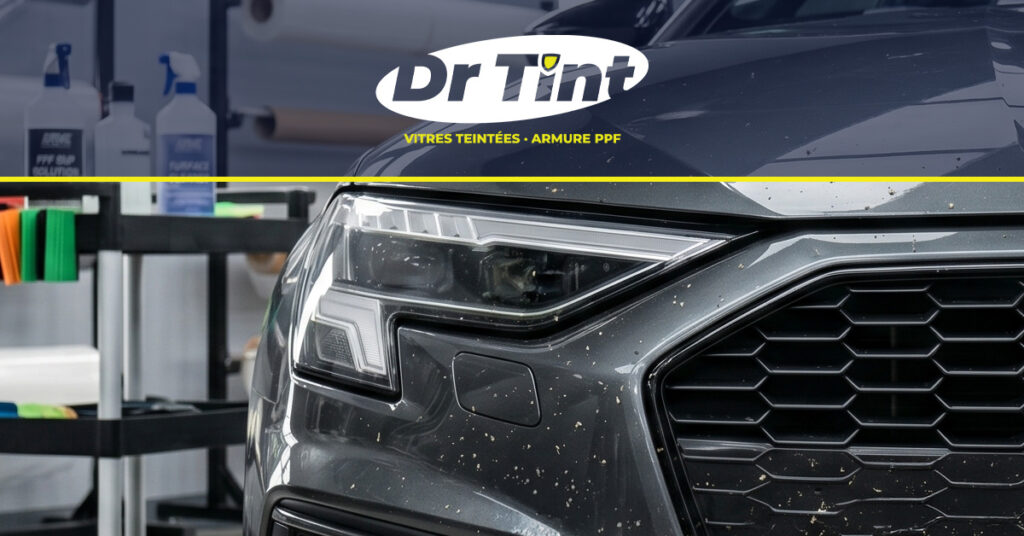
The PPF against insects becomes especially relevant as soon as warmer weather returns to Quebec. People often think of paint protection film for stone chips or winter roads, but summer also brings its own set of threats to your paint: insects crushed on the bumper, hot tar thrown up from the road, tree sap, construction dust, bitumen residue, and cleaning that becomes more difficult after several days of heat.
In Montreal, summer changes the way we drive. Trips to the park, highway drives, parking in the shade of trees, streets under construction, and long sunny days all expose the body of your vehicle to contaminants that stick quickly. At Dr Tint, we help drivers preserve the look of their vehicle with protection solutions adapted to the reality of Quebec.
PPF against insects: why summer is hard on your paint
Insects may seem harmless, but when they hit the front of a vehicle at highway speed, they can leave stubborn residue behind. On a hood, bumper, or side mirrors, these marks become harder to clean when they remain exposed to the sun.
The issue is not only cosmetic. The longer contaminants stay on the surface, the more they can mark the clear coat, especially if the vehicle is washed too late or with the wrong technique. PPF acts as a barrier between this residue and the original paint. Insects, tar, and dirt settle on the film instead of directly on the body.
The vehicle remains easier to maintain, especially for drivers who often travel on Autoroute 40, Autoroute 15, Autoroute 25, or the main roads around Montreal.
The most common summer contaminants in Quebec
Insects on the bumper and hood
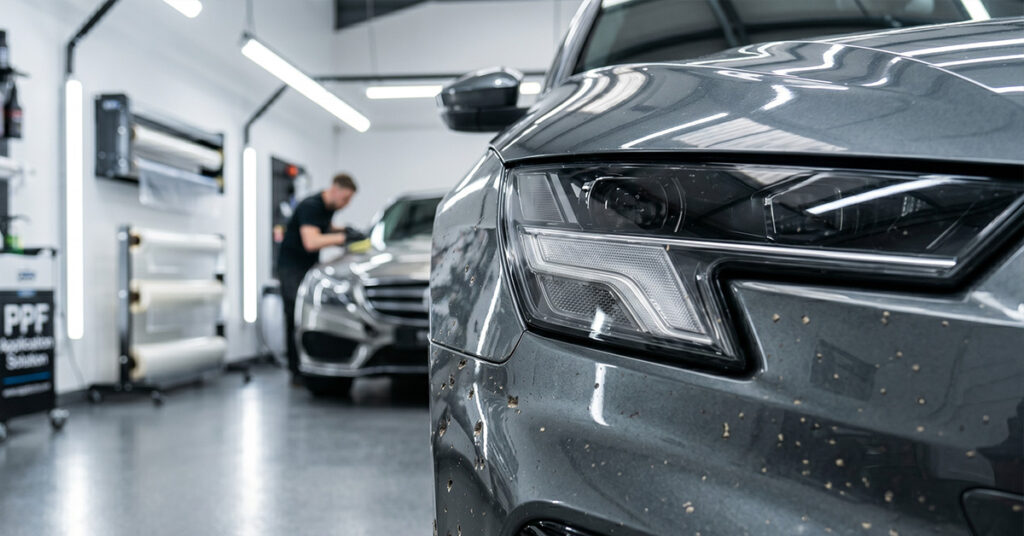
Insects mainly accumulate on the front of the vehicle: the bumper, hood edge, headlights, and mirrors. After a weekend outing, a round trip to the Laurentians, or simply several evening drives, the front of the car can quickly lose its clean finish.
PPF does not replace washing, but it helps reduce direct contact with the paint. It is a discreet protection that works every day, even when you are not thinking about it.
Tar and road residue
In summer, heat softens certain residues found on the road surface. Tar and sticky particles can be thrown onto the rocker panels, fenders, doors, and rear bumper. On light-colored paint, these small stains become visible very quickly.
A properly installed protection film helps protect the most exposed areas. This is especially useful for vehicles that often drive through construction zones, busy urban streets, or roads where the asphalt has recently been redone.
Tree sap and road dust
In summer in Montreal, it is natural to look for shade. Parking under a tree may seem pleasant, but sap can fall on the hood, roof, or fenders. Add road dust, pollen, and urban residue, and the body of the vehicle can quickly become difficult to clean.
PPF creates a protective layer that helps preserve the vehicle’s finish. For drivers who like to keep their car clean without constantly having to correct marks, it is a practical and durable solution.
Dr Tint in Montreal: protection designed for Quebec’s reality
At Dr Tint in Montreal, we understand local driving conditions: roads damaged after winter, roadwork, humid summers, urban dust, daily commutes, and long weekend getaways. A vehicle in Quebec does not live in a showroom. It drives, faces the weather, parks outside, crosses busy neighborhoods, bridges, construction zones, and country roads.
That is exactly why PPF makes sense. It protects sensitive areas while preserving the vehicle’s natural appearance. It is suitable for both a new vehicle and a vehicle you want to keep looking good longer, as long as the paint is in good condition before installation.
Which areas should be protected first against insects and contaminants?
Not all areas are exposed in the same way. For protection against insects and summer contaminants, the most strategic areas are generally:
- The front bumper
- The hood edge
- The front fenders
- The side mirrors
- The headlights
- The rocker panels
- The trunk sill
- Certain areas around the door handles
The goal is not necessarily to cover the entire vehicle. In many cases, targeted protection is enough to protect the most vulnerable surfaces in everyday driving. At Dr Tint, we can advise drivers based on their vehicle type, usage, driving habits, and aesthetic expectations.
A discreet protection that makes maintenance easier
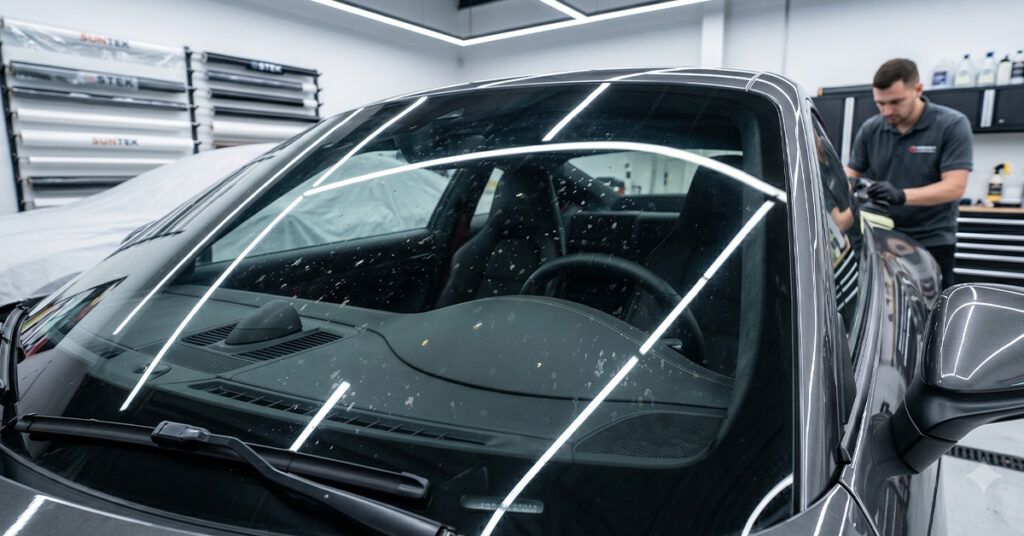
The biggest advantage of PPF in summer is often peace of mind. After a hot day, an evening drive, or parking under trees, you know the paint is better protected. Washing becomes less stressful because contaminants are not in direct contact with the original clear coat.
That said, PPF must still be properly maintained. Avoid aggressively scraping dried insects, use suitable products, and do not let residue build up for weeks. PPF protects, but it does not eliminate the need for regular maintenance.
After installation, it is also important to follow drying recommendations before washing the vehicle. This step allows the film to adhere properly and helps ensure a clean, durable, and attractive result.
Why act before marks appear?
Many drivers think about protecting their paint only after seeing the first signs of damage: small chips, tar stains, marks on the bumper, dull headlights, or pitted rocker panels. The problem is that once the paint is marked, PPF does not erase existing defects. It protects what is already there.
That is why the best time to install paint protection film is often before the most demanding season, or as soon as you purchase a new vehicle. Quebec summers are short, but intense. Between outings, construction zones, highways, and outdoor parking, the body of your vehicle is exposed every day.
A smart choice to keep your vehicle looking better, longer
A well-maintained vehicle keeps a cleaner, more polished appearance. Whether you drive a luxury car, a family SUV, an electric vehicle, a work vehicle, or simply a car you like to keep clean, paint protection helps preserve that satisfying feeling when light glides across a spotless body.
PPF against insects is not just an aesthetic expense. It is a way to reduce visible wear, simplify maintenance, and protect the most exposed areas in real life. In Montreal and throughout Quebec, it is a concrete solution for drivers who want to enjoy summer without watching every drive take a toll on their paint.
Visit Dr Tint for personalized advice
Every vehicle is different. Every driver is too. Some mostly drive in the city, others often take the highway, and others park outside every day. At Dr Tint, we can guide you toward the protection best suited to your real-world use.
To protect your vehicle against insects, tar, sap, and summer contaminants, contact Dr Tint in Montreal or visit us for personalized advice. We will help you choose the areas to protect and the most suitable solution for your vehicle.
FAQ – PPF against insects
Does PPF really protect against insects?
Yes, PPF helps create a barrier between insect residue and the paint. Insects settle on the film instead of directly on the original clear coat.
Does PPF completely prevent stains?
No. PPF helps protect the paint, but the vehicle still needs to be cleaned regularly. Contaminants should not remain on the surface for too long.
Which areas are most important to protect?
The front bumper, hood edge, side mirrors, front fenders, and headlights are among the areas most exposed to insects and road debris.
Is PPF only useful for new vehicles?
No. It can also be useful on a vehicle that is already on the road, as long as the paint is in good condition. An inspection can help determine whether the surface is ready for film installation.
Where can I get PPF against insects installed in Montreal?
You can contact Dr Tint in Montreal for personalized advice and choose a PPF protection solution adapted to your vehicle, your driving habits, and the summer season in Quebec.