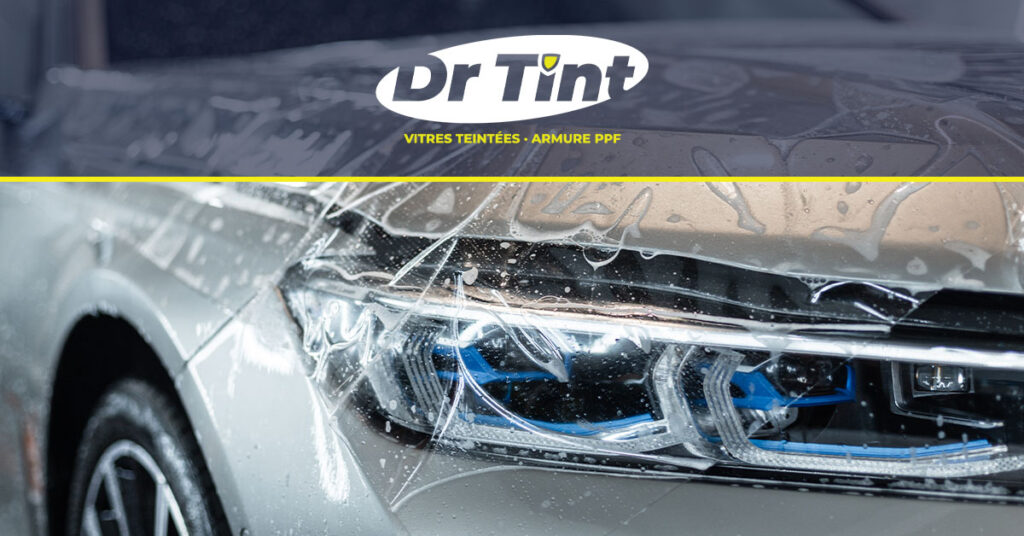
PPF after body repair: it is often the first question that comes up after having a bumper, hood, or fender repainted. The vehicle comes out of the shop, the paint shines again, the reflections look clean, and naturally, you want to avoid seeing stone chips, salt marks, or scratches again after only a few weeks on Quebec roads. The instinct is right. The timing, however, has to be chosen carefully.
Paint protection film, also called PPF, can be an excellent solution to protect a repaired surface. But fresh paint is not exactly the same as factory paint. It may need curing time before receiving a protective film. Installing it too soon can affect the result. Waiting too long can expose the repaired area to the same risks that caused the damage in the first place.
PPF after body repair: why timing matters
After a body repair, the paint may feel dry to the touch quickly. However, depending on the type of paint, the clear coat, the drying method, and the shop conditions, the surface may continue to harden for a certain period of time. This is often referred to as curing time.
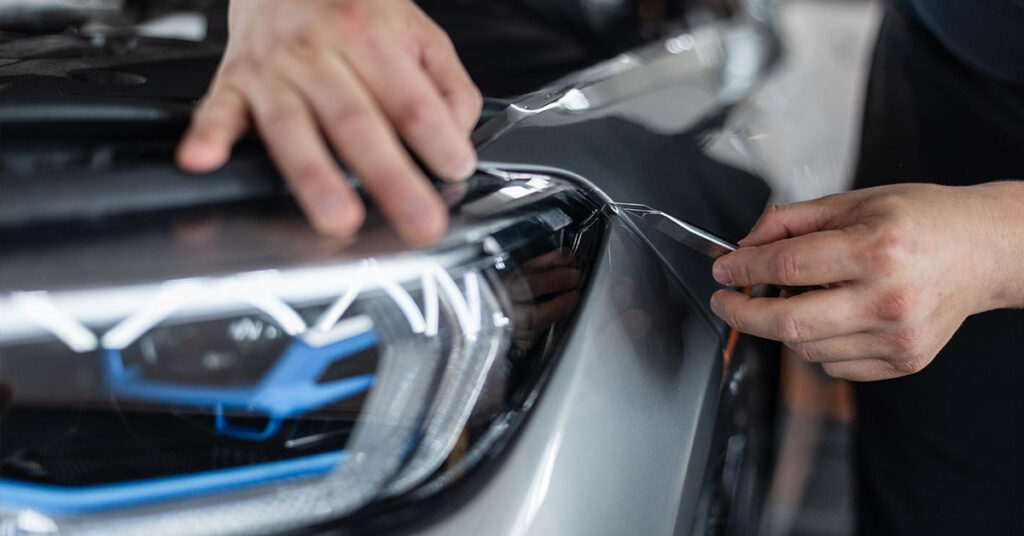
The role of PPF is to create a physical barrier over the paint. This film protects against stone chips, sand, road salt, insects, tar, and road debris. At Dr Tint, Armure paint protection films are made of urethane and include an anti-UV layer; they are designed to help preserve the vehicle’s appearance against common aggressions caused by Quebec’s climate.
But on fresh paint, the priority is to avoid sealing a surface that is not ready. That is why it is always important to confirm the proper delay with the body shop that performed the repair. 3M recommends following the paint supplier’s instructions, noting that many installers wait at least 30 days to reduce risks.
The right reflex: ask the body shop before applying the film
The ideal delay cannot be guessed. It depends on the paint used, the repaired part, the baking or drying process, the temperature, and even humidity. A repainted plastic bumper does not always react the same way as a metal hood. A localized touch-up does not necessarily require the same approach as a fully repainted panel.
Before booking a PPF appointment, ask your body shop:
- when the paint can receive a protective film;
- which paint system was used;
- whether the part was baked or air-dried;
- whether the paint can be waxed or sealed;
- whether film installation is recommended now or later.
A simple rule: if the body shop recommends waiting before waxing the paint, you should generally wait before installing paint protection film as well.
Dr Tint in Montreal: protecting freshly repaired areas with precision
In Montreal, between streets damaged by freeze-thaw cycles, roadwork, tight parking spaces, and gravel spray on the highway, new paint can quickly be put to the test again. This is especially true after a repair on the front of the vehicle.
At Dr Tint in Montreal, PPF installation can target the most exposed areas: hood, front bumper, fenders, mirrors, lower doors, and other vulnerable surfaces. Dr Tint also offers protective film services and personalized advice to help every driver choose protection suited to their vehicle and driving habits.
The goal is not to apply film at all costs. The goal is to protect at the right time, on a surface that is ready, clean, stable, and properly prepared.
Which repainted parts benefit most from protection?
Some areas clearly benefit from being protected after a body repair.
The front bumper
This is the first line of defense against gravel, sand, insects, and road spray. If your bumper has just been repainted, it makes sense to want to protect it quickly, but only after confirming the proper curing time.
The hood
The hood often receives visible impacts, especially when driving on Highway 40, Highway 15, Highway 20, or suburban roads around Montreal. A film on the front section of the hood can help reduce chips.
The front fenders
The fenders are exposed to side spray, especially when the road is dirty, wet, or covered in construction dust.
The mirrors
Small but highly exposed, mirrors receive many impacts at higher speeds.
The trunk sill and lower doors
These areas are not always affected by stones, but they deal with bags, boots, strollers, tools, sports equipment, and everyday use.
Before installation: what to avoid on fresh paint
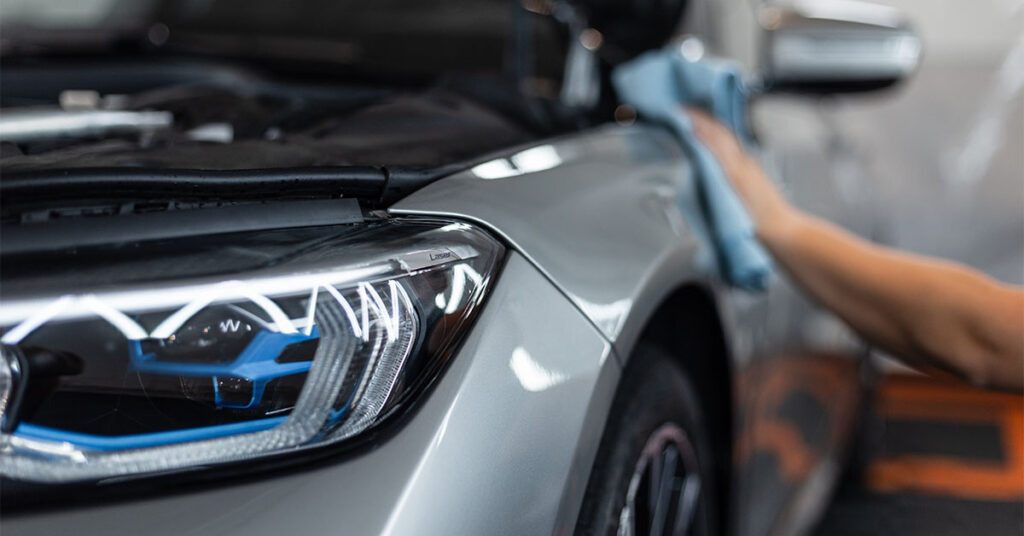
During the waiting period, the paint should be protected without being stressed. Avoid abrasive products, solvents, aggressive polishing compounds, non-recommended waxes, and harsh washing. Mild soap, clean water, and a clean microfiber towel are generally safer than an overly strong product.
At Dr Tint, Armure protective film maintenance is done with mild soap, water rinsing, and without abrasive products or solvents. After film installation, Dr Tint also recommends waiting 48 hours before washing the vehicle.
This gentle approach is even more important before installation, when the paint has just been repaired.
After PPF installation: let the film settle
Once the PPF has been installed, patience remains important. The film needs time to properly bond to the surface. It is normal for the installer to provide specific instructions for the first few days: avoid immediate washing, do not pick at the edges, do not direct a high-pressure spray too close to the edges, and avoid aggressive chemicals.
The goal is simple: let the protection do its job. Proper installation, combined with reasonable maintenance, helps preserve a clean, glossy, and long-lasting finish.
A useful protection for drivers in Montreal and Quebec
In Quebec, a vehicle’s body goes through four very different seasons. Summer brings insects, dust, tar, and construction zones. Fall brings humidity and stuck leaves. Winter adds salt, calcium, ice, and sand. Spring often reveals the small impacts accumulated during the colder months.
For a driver who has just had bodywork repaired, PPF becomes a way to start fresh. It is a discreet, almost invisible protection that preserves the vehicle’s lines while adding a barrier against common road aggressions.
Before booking: have your situation checked
Every repair is different. Before installing PPF on fresh paint, the best step is to have the surface condition validated. Contact Dr Tint for personalized advice, explain which part was repainted, and plan the right time to protect your vehicle.
Fresh paint deserves better than a rushed decision. With the right delay, proper preparation, and professional installation, your vehicle can regain its shine while being better protected for the roads of Montreal, the North Shore, the South Shore, and Quebec.
FAQ: PPF after body repair
How long should you wait before installing PPF on fresh paint?
The delay depends on the paint, clear coat, drying method, and body shop recommendations. As a precaution, many installers wait at least 30 days, but you should always confirm with the body shop.
Can PPF be installed immediately after a repair?
It is not recommended without professional confirmation. Even if the paint seems dry, it may still be curing. Installing film too soon can affect the result.
Can PPF damage fresh paint?
On properly cured and well-prepared paint, PPF is designed to protect the surface. The risk is mainly higher if the paint has not had enough time to cure before installation.
Which areas should be protected after a body repair?
The most relevant areas are often the front bumper, hood, fenders, mirrors, lower doors, and trunk sill, depending on the repaired part and your driving habits.
Can I wash my vehicle after PPF installation?
At Dr Tint, it is recommended to wait 48 hours after installing Armure protective films before washing the vehicle. After that, use mild soap, rinse with water, and avoid abrasive products or solvents.