When winter ends, preparing your vehicle for spring becomes an important step to prevent damage caused by salt, abrasives, and temperature fluctuations from getting worse. The cold season often leaves behind micro-scratches, paint chips, and signs of oxidation that can worsen quickly if ignored.
Spring is therefore the ideal time to inspect the bodywork and decide which protection options are truly worth the investment. Between temporary treatments and long-term protection solutions, several options are available. The goal is simple: protect your vehicle effectively without falling for exaggerated marketing claims.
Here is a clear guide to understanding the differences and making a logical choice.
Why spring is the ideal time to protect your vehicle
During winter, Quebec roads are covered with salt, sand, and gravel. These elements cause several types of damage:
- micro-scratches on the paint
- paint chips caused by road debris
- build-up of contaminants
- early oxidation in exposed areas
Once the snow disappears, these imperfections become visible. It is also the time when the bodywork is most vulnerable: damaged surfaces can deteriorate quickly under the effects of moisture and UV rays.
Preparing your vehicle for spring therefore makes it possible:
- to correct defects left by winter
- to protect the paint before summer
- to avoid more costly repairs later
Preventive maintenance always costs less than a complete restoration.
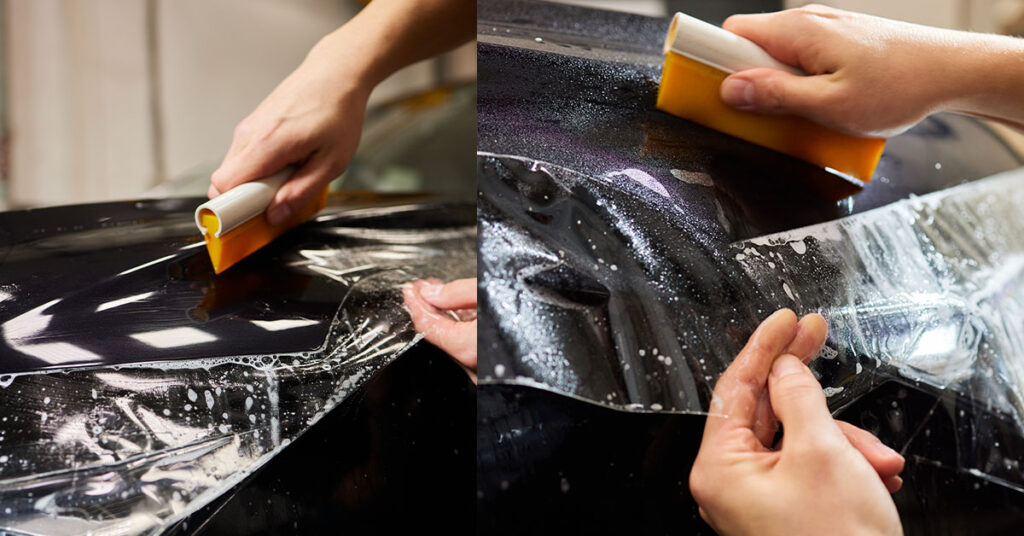
Basic inspection: the first step before any protection
Before applying any protection, you need to assess the vehicle’s actual condition. Several areas deserve special attention.
Hood and front bumper
These are the surfaces most exposed to gravel impacts. Small paint chips are common after winter.
Lower doors and fenders
Salt and sand build up in these areas. Early signs of corrosion often appear here.
Mirrors and wheel arch edges
These parts are also exposed to abrasion caused by road debris.
Windshield
Small impacts can turn into cracks with temperature changes.
A simple visual inspection is often enough to determine whether paint correction is needed before applying protection.
Temporary protection vs. long-term protection
When you want to prepare your vehicle for spring, you need to understand the difference between two main categories of protection.
Some solutions are quick and affordable, but offer limited durability. Others require a greater investment, but protect the vehicle for several years.
Temporary protections: useful but limited
Temporary protections are often offered during detailing services or seasonal treatments.
Traditional waxes
Car wax is a simple solution to improve the appearance of the paint and add a thin layer of protection.
Advantages:
- affordable price
- quick application
- improved shine
Disadvantages:
- limited lifespan (a few weeks to a few months)
- weak protection against gravel impacts
- requires frequent reapplication
Synthetic sealants
Polymer sealants provide slightly better protection than wax.
Advantages:
- better durability
- protection against contaminants
Limitations:
- does not protect against physical impacts
- usually lasts less than a full season
These solutions are useful for regular maintenance, but they do not replace a durable protection system.
Long-term protections: a strategic investment
Permanent or semi-permanent protections are designed to protect the bodywork for several years.
They are especially worthwhile for newer vehicles or for owners who want to preserve the visual value of their car.
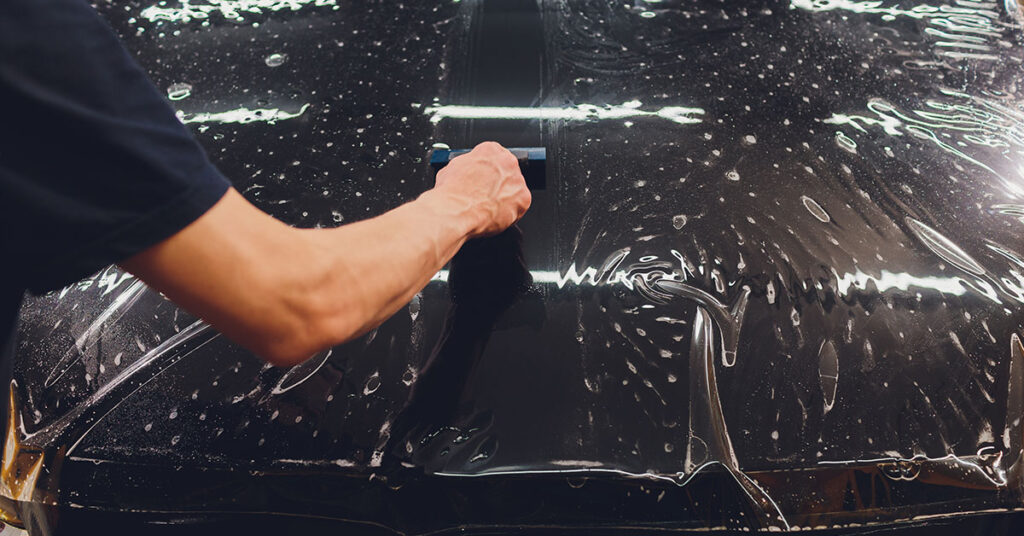
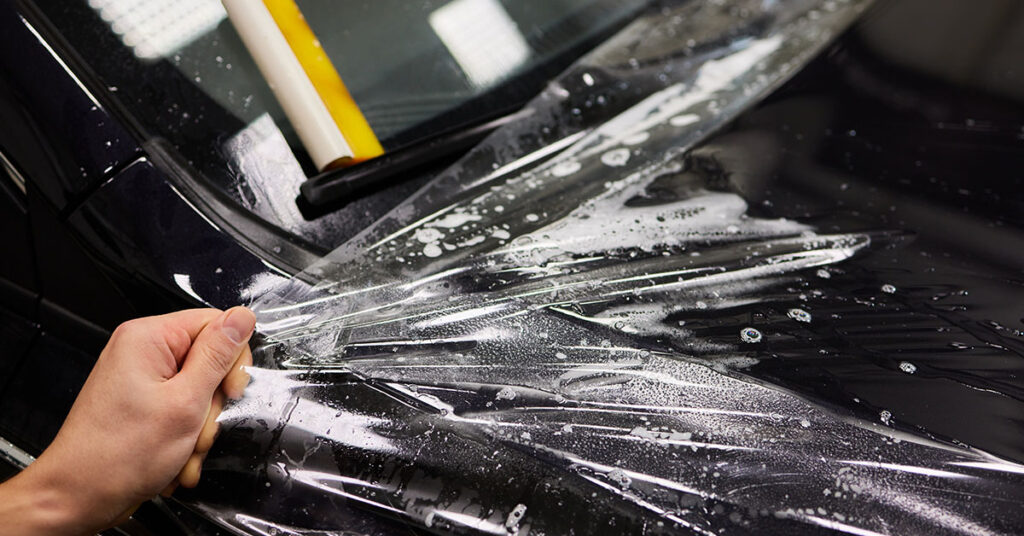
Paint protection film (PPF)
PPF, often called protective film, is one of the most effective solutions against physical damage.
This transparent film is applied to vulnerable areas:
- hood
- bumper
- front fenders
- mirrors
Advantages:
- protects against gravel impacts
- reduces scratches
- invisible once installed
It is the most effective solution for exposed areas.
Ceramic coating
Ceramic coating is a chemical protection that bonds to the vehicle’s paint.
Advantages:
- strong resistance to contaminants
- UV protection
- easier maintenance
- hydrophobic effect
However, one important thing must be understood: ceramic coating does not protect against stone chips. It acts more as a barrier against dirt and oxidation.
Which protection to choose based on your situation
There is no one-size-fits-all solution. The right choice depends on several factors.
New vehicle
For a new vehicle, the following combination is often the most logical:
- paint protection film on impact-prone areas
- ceramic coating on the rest of the vehicle
This helps protect the paint from the start.
Recent vehicle
If the paint is still in good condition, a light paint correction followed by durable protection may be enough.
Older vehicle
In this case, temporary protection may be more realistic, especially if the paint already shows several imperfections.
The common mistake: waiting too long
Many owners wait until summer before taking care of protecting their car.
That is often a mistake.
Small paint chips can quickly turn into corrosion spots. Protection applied early in spring helps stabilize the situation.
It also prevents contaminants accumulated during winter from becoming embedded in the clear coat.
Why leave protection work to specialists
Applying certain protections requires careful preparation.
The steps generally include:
- decontamination wash
- paint correction
- surface preparation
- controlled application of the protection
A professional has the equipment and experience needed to ensure an even and durable installation.
At Dr Tint, services include paint protection, protective films, and various detailing treatments designed to preserve a vehicle’s appearance.
The goal is not only aesthetic: it is also about preserving the vehicle’s value over the long term.
Conclusion: protect smart instead of spending unnecessarily
Preparing your vehicle after winter does not mean buying every protection product available.
The right approach is to:
- inspect the vehicle’s actual condition
- correct existing defects
- choose protection suited to how the vehicle is used
Temporary protections may be enough for routine maintenance, but durable solutions become cost-effective when you truly want to preserve the bodywork.
For many owners, spring is therefore the ideal time to act before the damage gets worse.
FAQ
Why is preparing your vehicle for spring important?
Winter often leaves behind salt residue, micro-scratches, and paint chips. Spring preparation helps prevent this damage from getting worse.
What is the best protection for a vehicle’s paint?
Paint protection film (PPF) is the most effective solution against gravel impacts. Ceramic coating instead protects against contaminants and UV rays.
Is car wax enough to protect a vehicle?
Wax provides temporary protection and improves the vehicle’s appearance, but it does not protect against impacts or long-term damage.
Should paint correction be done before applying protection?
Yes. Protection products should be applied to a clean, corrected surface to achieve a durable and visually clean result.
When should protection be applied in spring?
Ideally as soon as winter ends, when temperatures start rising and the roads are free of salt.