A ceramic windshield film may seem especially appealing when you return to your car after it has been sitting in the sun for several hours. When you open the door, the air feels heavy, the dashboard is hot, and the steering wheel can sometimes be difficult to touch. A very light film capable of reducing some of the sun’s heat may seem like the ideal solution. In Quebec, however, there is one important rule to consider: a film cannot cover the entire surface of the windshield.
Ceramic technology remains relevant for improving comfort inside a vehicle, but it must be installed on authorized surfaces. At Dr Tint, we provide recommendations tailored to the vehicle, the driver’s needs, and the applicable regulations.
Why Does the Interior of a Car Get So Hot?
Imagine a car parked on a Montreal street on a July afternoon. Sunlight passes through the windows and gradually heats the interior surfaces:
- the steering wheel;
- the dashboard;
- the seats;
- the trim;
- the center console.
These surfaces absorb some of the sun’s energy and then release heat into the cabin. Even after turning on the air conditioning, it often takes time before the temperature becomes comfortable again.
Automotive films are designed to act on some of the solar radiation passing through the windows. Their effectiveness varies depending on the technology, level of transparency, type of glass, and specific characteristics of the product.
Ceramic Windshield Film: Clear Does Not Mean Ineffective
One idea often comes up when discussing tinted windows: the darker the film, the better it must perform against heat. That is not necessarily the case.
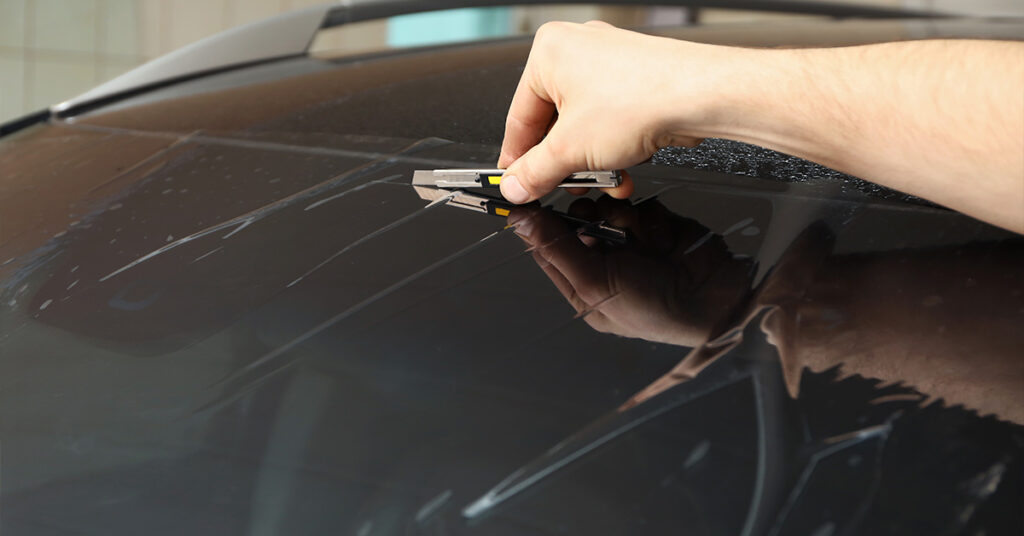
Visible tint and thermal performance are two different characteristics. Some ceramic films are available in very light or nearly transparent versions. Their construction contains non-metallic ceramic particles designed to improve heat and infrared rejection without creating a very dark appearance. Exact performance depends on the product line and its level of visible light transmission.
A light film can therefore provide better thermal protection than a darker traditional film. It is important to compare the product’s technical specifications rather than relying only on its appearance.
What a Ceramic Film Can Actually Provide
The scenario presented in the video is simple: the driver gets into a car that has been exposed to the sun and finds a burning-hot steering wheel. Ceramic film is presented as a way to help reduce this problem while remaining visually discreet.
In reality, no film can completely eliminate all the heat entering a vehicle. However, a suitable ceramic film can help:
- reduce the amount of solar energy transmitted through the windows;
- reduce the heat felt inside the cabin;
- make returning to the car more comfortable;
- limit the exposure of interior materials to UV rays;
- reduce glare, depending on the selected tint level;
- maintain a clearer appearance than a dark tint.
Ceramic film manufacturers publish separate measurements for visible light transmission, total solar energy rejection, infrared rejection, and UV protection. Results therefore vary from one product to another.
An Important Difference From Nano-Ceramic Coating
Ceramic window film should not be confused with a nano-ceramic coating for the vehicle’s body.
Window film is a membrane installed on a glass surface to modify certain properties related to heat, UV rays, glare, or appearance.
A nano-ceramic coating for the body is instead applied to the paint. Its purpose is to make maintenance easier and help protect the vehicle’s finish against certain environmental contaminants. At Dr Tint, these two services therefore address different needs.
Is Full Windshield Film Legal in Quebec?
The answer is no.
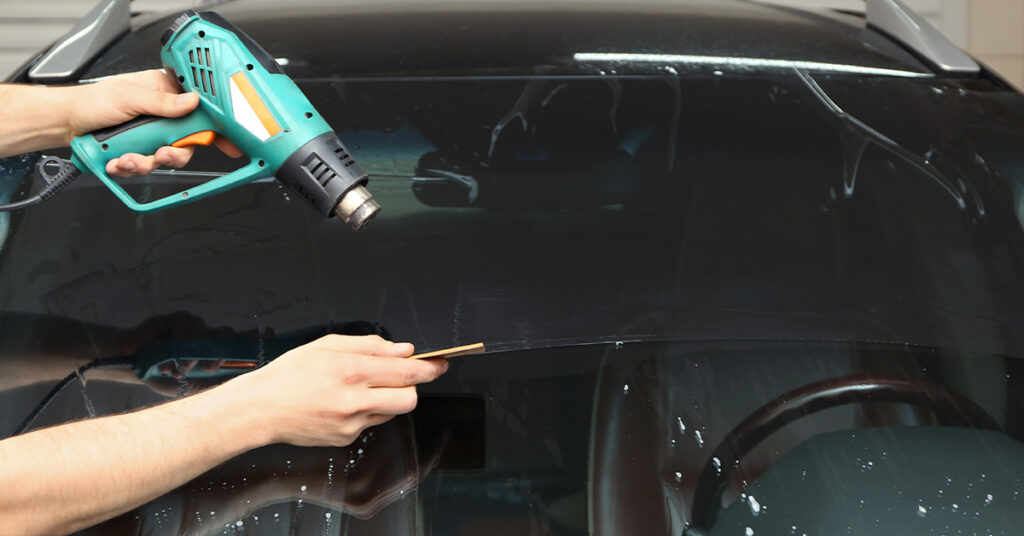
The Société de l’assurance automobile du Québec specifies that no material or substance may be applied or sprayed onto the windshield. Only a strip measuring no more than 15 cm wide may be placed along the upper portion. This rule applies even when the film is very light or nearly transparent.
The technology presented in the video may therefore exist and be used in jurisdictions where full windshield installation is permitted. However, for a vehicle driven in Quebec, it cannot be applied over the entire surface of the windshield.
This distinction is essential: the transparent or ceramic nature of a film does not replace the requirement to comply with provincial regulations.
Which Surfaces Can Be Protected?
To improve the thermal comfort of a vehicle in Quebec, the other glass surfaces can be considered.
Front Side Windows
They must allow at least 70% of light to pass through when measured with a photometer. Since factory glass is already slightly tinted, adding a film can quickly bring the vehicle below the permitted threshold. A professional assessment is therefore essential before installation.
Rear Side Windows
Quebec regulations do not impose the same visible light transmission limit on these windows. They can receive a darker film depending on the desired level of comfort, privacy, and appearance.
Rear Window
It can also receive a film. However, the selection must preserve adequate visibility and account for systems integrated into the glass, such as the rear defroster.
Upper Windshield Strip
A sun strip measuring no more than 15 cm is permitted along the upper portion of the windshield. Its installation must remain compliant and must not interfere with the driver’s visibility.
Dr Tint in Montreal: Choosing a Suitable and Compliant Solution
In Montreal, the summer sun can quickly heat up a parked car, whether it is in front of your home, near your workplace, or in an uncovered parking lot. A properly selected automotive film can improve comfort, but its placement and level of transparency must be determined carefully.
Founded in 1989, Dr Tint specializes in the installation of tinted windows and protective films in Quebec. We use a personalized approach to recommend a solution compatible with the vehicle and the driver’s needs.
Before installation, several factors must be assessed:
- The type of vehicle and glass.
- The tint already present in the factory glass.
- The surfaces the customer wants to treat.
- The level of heat and glare experienced.
- The visible light transmission of the selected product.
- The legal requirements applicable in Quebec.
Our goal is not simply to darken a window. It is to find the right balance between comfort, appearance, visibility, and compliance.
Ask for Advice Before Choosing Your Film
A very light ceramic film can offer valuable thermal properties. In Quebec, however, it cannot be installed over the entire windshield. The best approach is to assess the permitted windows and select a combination suited to your vehicle.
You can visit or contact Dr Tint to obtain more information, review the available solutions, and receive personalized advice. Our team can guide you toward a compliant installation that genuinely improves your comfort on the roads of Montreal and Quebec.
FAQ About Ceramic Windshield Film
Can Ceramic Film Be Installed Over the Entire Windshield in Quebec?
No. Quebec regulations prohibit applying or spraying any material or substance onto the windshield. Only a strip measuring no more than 15 cm wide is permitted along the upper portion.
Can a Light Ceramic Film Reduce Heat?
Yes. Some nearly transparent ceramic films are designed to reduce part of the solar heat and infrared radiation entering the vehicle. Results depend on the product, the glass, and the exposure conditions.
Does a Darker Film Always Block More Heat?
No. Visible color and thermal performance are not the same. A light ceramic film can provide better heat rejection than a darker traditional film.
What Tint Level Is Permitted on the Front Side Windows?
The front side windows must allow at least 70% of light to pass through. The tint already built into the factory glass must be considered before adding a film.
Where Can I Get Advice About Automotive Films in Montreal?
You can contact Dr Tint to discuss your vehicle, your thermal comfort needs, and the options that comply with Quebec regulations.