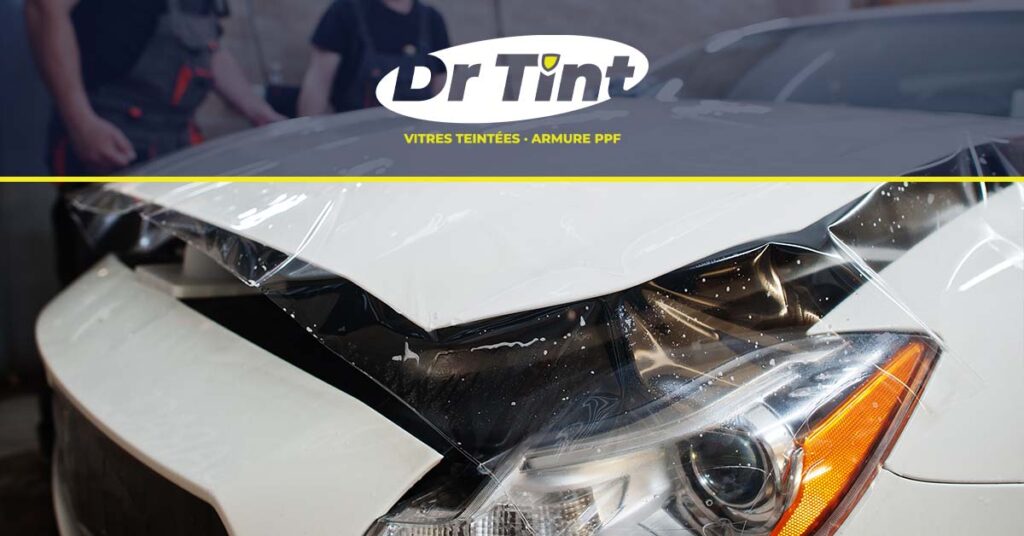
Your electric vehicle goes everywhere with you: on the streets of Montreal, on Quebec’s highways and on weekend getaways. But every trip exposes its body to gravel, road spray and scratches.
Installing PPF for electric vehicles protects the most vulnerable painted surfaces while preserving their original look.
At Dr Tint, we help you determine which areas to protect first based on your vehicle, your driving habits and your budget.
Why Install PPF on an Electric Vehicle?
PPF (Paint Protection Film), also called clear bra or rock chip protection film, is a transparent protective film applied directly to the body.
Its job is to create a physical barrier against a range of everyday hazards:
- Impacts from small stones and gravel.
- Surface scratches.
- Road salt and abrasives.
- Insects and some road grime.
- Marks caused by repeated contact.
Unlike a ceramic coating, which is mainly meant to protect the finish and make it easier to maintain, PPF helps limit physical damage to the paint.
An electric powertrain doesn’t require a special film. However, the design of certain models, particularly their largely painted front end, deserves some extra attention.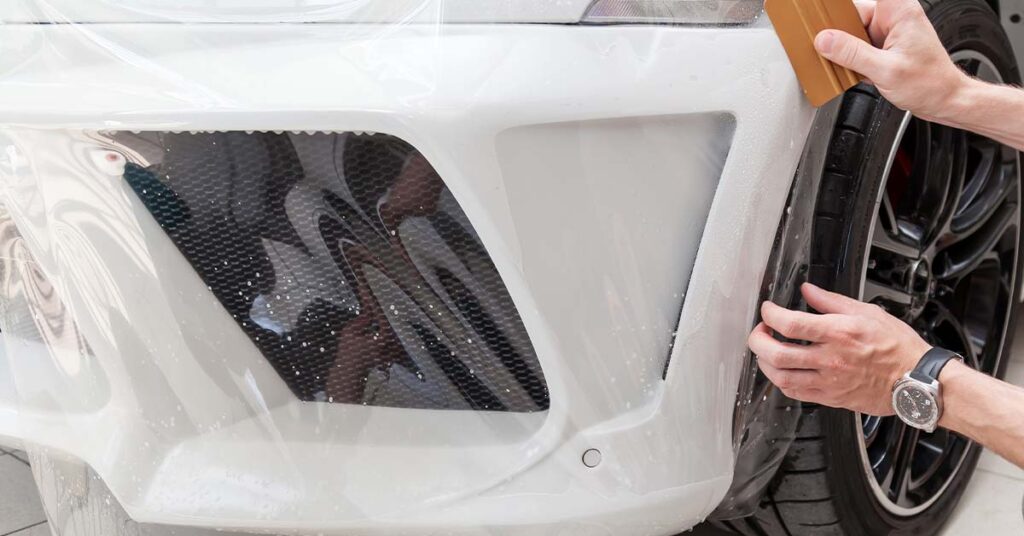
The Areas to Protect First on Your Electric Vehicle
1. The Front Bumper: Your First Line of Defense
Picture your daily drive on Autoroute 40, behind a vehicle kicking up small stones.
The front bumper takes a direct share of this spray. On some electric vehicles, the absence of a traditional grille leaves more painted surfaces exposed.
A protective film helps limit paint chips and the marks left by these impacts.
Our advice: start with the front bumper if you want to protect the most exposed surfaces without necessarily covering your entire vehicle.
2. The Hood and Front Fenders: Preserving Highly Visible Surfaces
The hood is another area that’s particularly exposed to flying gravel.
The front fenders can also take hits, especially near the wheel wells.
Two approaches are possible:
- Partial protection targeting the most exposed sections.
- Full protection of the hood and front fenders for broader coverage.
For a new electric vehicle, the second option helps avoid visible lines between a protected section and an unprotected one.
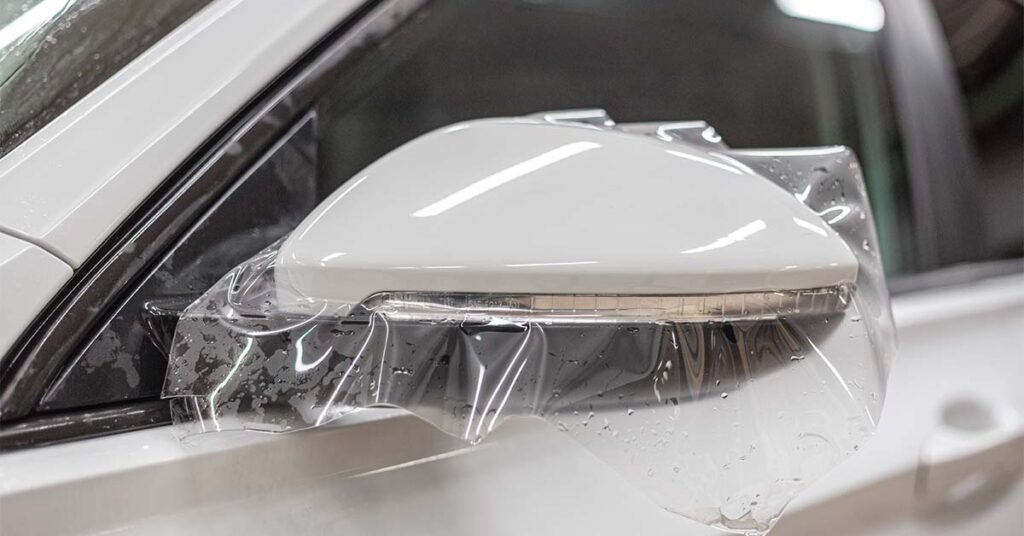
3. The Side Mirrors: Small Surfaces, Big Exposure
The exterior mirrors are constantly exposed to road spray.
Despite their small size, they can develop chips and scratches that stand out, especially on a dark body.
Protecting them is a logical complement to the bumper and hood.
Rocker Panels, Doors and Trunk: The Often-Forgotten Areas
4. Rocker Panels: Especially Useful in Quebec
In winter, Montreal’s roads are covered in salt, sand and abrasives.
Tires throw these particles toward the lower parts of the vehicle, including the rocker panels and some sections behind the wheels.
PPF helps limit the surface wear caused by this spray.
This protection is especially relevant for drivers who regularly take the highway or travel on roads where gravel is common.
5. Doors and Handles: Avoiding Everyday Marks
Shopping center parking lots, home garages and tight spaces multiply the risk of accidental contact.
Door edges can rub against neighboring surfaces. The areas around the handles can also pick up small marks.
A targeted film helps preserve these surfaces without changing their appearance.
On electric vehicles, the area around the charge port door can also be exposed to daily rubbing. Depending on the vehicle’s configuration, our team can assess protection options for this surface.
6. The Trunk Sill: Protecting Surfaces You Use Every Day
Grocery bags, strollers, suitcases and sports gear: every load can leave marks on the edge of the trunk.
Installing a protective film in this area is a practical solution for families and drivers who frequently use their cargo space.
Partial or Full Protection: How to Choose?
You don’t always need to cover the entire body to enjoy the benefits of PPF.
The choice depends mainly on the exposed surfaces and your priorities.
| Type of protection | Areas covered |
| Targeted protection | Front bumper, certain sections of the hood and mirrors |
| Full front protection | Bumper, hood, front fenders and mirrors |
| Complementary protection | Rocker panels, door edges and trunk sill |
| Full-body protection | All eligible painted surfaces |
For drivers who regularly cover long distances, fully protecting the front end can be a smart choice.
Conversely, mainly urban driving can justify targeted protection combining the front of the vehicle and the areas subject to everyday rubbing.
At Dr Tint in Montreal: Protection Tailored to Your Electric Vehicle
Do you drive a Tesla, a Hyundai IONIQ, a Kia EV6 or another electric vehicle? At Dr Tint, we can examine your body’s characteristics to determine the protection options available for your model.
We offer XPEL and Armor PPF protective films, designed to help preserve your paint against road hazards.
Our qualified technicians use digital cutting methods to fit the films to the vehicle’s contours.
This precision matters on modern bodies, some of which have complex curves.
The presence of cameras and sensors must also be taken into account before installation. Eligible areas must be assessed based on the vehicle’s configuration and the manufacturer’s recommendations.
Our goal is to offer you protection that respects both the look and the features of your vehicle.
How Do You Care for Your PPF After Installation?
Proper care helps preserve the clarity and durability of your protective film.
After installation, follow the recommended wait time before the first wash. For Armor films, we recommend 48 hours.
Then use a gentle car soap, rinse thoroughly and choose non-abrasive wash tools.
Avoid harsh solvents and products that could damage the film’s surface.
Some premium films also have self-healing properties: light surface marks can fade with heat.
PPF remains protection against everyday damage, however, not against every impact.
Protect Your Electric Vehicle with Dr Tint in Montreal
Your electric vehicle deserves protection suited to how you really use it.
Whether you want to keep a new-car look, limit winter damage or preserve the most exposed surfaces, a paint protection film is a solution worth considering.
At Dr Tint, in Montreal, Quebec, we help you choose between targeted and more complete protection.
Contact our team or stop by for personalized advice and a quote tailored to your electric vehicle.
FAQ: PPF for Electric Vehicles
1. Does an electric vehicle need PPF more than a gas-powered car?
Not necessarily. Both types of vehicles face the same road hazards. However, some electric vehicle bodies have large painted areas at the front, which can influence which areas to protect.
2. Which areas should I protect first on a limited budget?
We recommend starting with the most exposed surfaces, notably the front bumper and the front part of the hood. The mirrors are also a worthwhile addition.
3. Can PPF be installed on a Tesla or a Hyundai IONIQ?
Yes. A protective film can be installed on the eligible surfaces of many electric models. The cut and coverage must be adapted to the model and its equipment.
4. Can PPF improve an electric vehicle’s range?
No. PPF mainly protects the body from surface damage. It isn’t designed to increase range, improve battery performance or reduce energy consumption.
5. How much does PPF installation for an electric vehicle cost at Dr Tint?
Pricing depends on the model, the size of the vehicle, the film selected and the surfaces to be protected. Contact our team in Montreal for a personalized quote.